
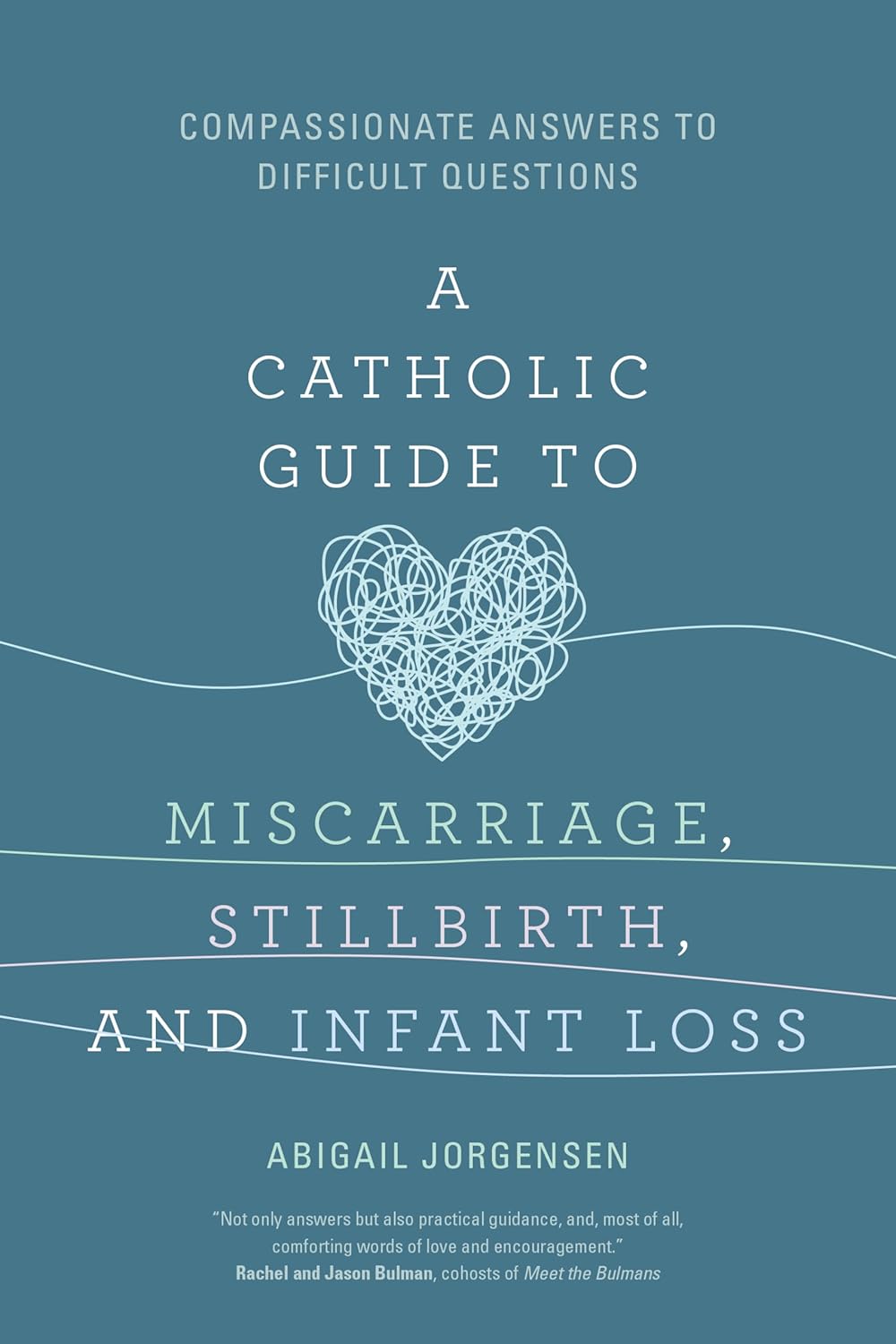
A Catholic Guide to Miscarriage, Stillbirth, and Infant Loss: Compassionate Answers to Difficult Questions
$19.95
Price: $19.95
(as of Mar 20, 2025 15:23:54 UTC – Details)
Losing a child is devastating. For Catholic parents who lose a child before or shortly after birth, this profound grief often comes with distinctive, sudden, and difficult questions about God, the Church, and who they are now as parents to the child they have lost. Why did God let this happen? Where is my baby? Can the Church help me make sense of this? What do we do now?
In A Catholic Guide to Miscarriage, Stillbirth, and Infant Loss, Abigail Jorgensen serves as a companion and guide through perinatal loss in light of Catholic teaching. She addresses difficult medical, theological, and practical questions asked by loss parents and the friends, family, pastors, ministers, and medical professionals who support them.
Jorgensen has first-hand experience, both as a mother who has lost children in miscarriage and as a Catholic bereavement doula—someone who walks with families through early child loss. Through her own experiences, she discovered how hard it can be to find adequate answers and spiritual help from the within the Church, so she wrote the book that she and her clients have needed.
This first-of-its-kind resource blends Jorgensen’s professional expertise with the wisdom of the Church to provide an essential guide through the most pressing concerns that arise during this difficult time. Drawing on the Bible, the Church’s prayer traditions, the saints, sacraments, official teaching documents, and grief support research, Jorgensen offers comfort, hope, and compassionate responses to tough questions, including:
Why does perinatal loss happen? Will I be with my baby again? What are normal emotions, and when should I seek extra support? How should we grieve as parents? What saints can I turn to as a loss parent? How do I approach God with these painful questions? Why would God allow such a short life? How can I honor my baby’s memory? What if I say the wrong thing to someone who is grieving the loss of their child? How do I support someone who experiences anger during their grief?
Through easy-to-navigate question and answer sections, helpful definitions, and practical takeaways, A Catholic Guide to Miscarriage, Stillbirth, and Infant Loss provides parents and their support networks a crucial lifeline through this heartbreaking experience.
From the Publisher


The Lord is close to the brokenhearted. (Psalm 34:18)
In times of grief, Catholics need the loving embrace of the Lord more than ever. That is why Abigail Jorgensen, a Catholic bereavement doula and loss parent herself, wanted to create a tender and comprehensive guide for Catholics to help them navigate the labyrinth of emotions and questions that accompany the loss of a child in miscarriage, stillbirth, or infancy.
Tailored for loss parents seeking solace, or the friends, family, pastors, ministers, and medical professionals who support them, A Catholic Guide to Miscarriage, Stillbirth, and Infant Loss offers a roadmap through the complexities of grief and faith with grace, compassion, and unwavering solidarity. Whether you are searching for answers, comfort, or practical next steps, this book invites you on a journey of healing and reflection through an emotionally complex and difficult time.

Answers to Medical Questions, such as:
There isn’t a simple answer. Part of this is because there are many myths about what causes perinatal loss. Another part of this is that, sometimes, we just don’t know.
The most common reason for perinatal loss, particularly miscarriage, is random genetic mutations. In other words, the vast majority of miscarriages are not preventable. Other less common causes of miscarriage include hormonal problems, infections, diseases, and malnutrition.
The causes of stillbirth include problems with the placenta or umbilical cord, infections, maternal organ disorders, and again, genetics. The causes of infant loss include injuries; preterm birth; low birth weight; accidents; SUIDs; and again, genetics.
If you have specific questions about the cause of death or likely cause of death for your child, you can ask your medical-care provider. However, I want to gently warn you that it’s fairly rare that you can know a definite cause of death for a particular little one.

Answers to Theological Questions, such as:
The Catechism of the Catholic Church reads, “As regards children who have died without Baptism, the Church can only entrust them to the mercy of God, as she does in her funeral rites for them. Indeed, the great mercy of God who desires that all men should be saved, and Jesus’ tenderness toward children which caused him to say, ‘Let the children come to me, do not hinder them,’ allow us to hope that there is a way of salvation for children who have died without Baptism” (1261).
In other words, the Church teaches that we don’t know where unbaptized babies go. But we have hope of their salvation, rooted in the most fundamental truth we know about God: God is love. That may not be what you want to hear right now, and I wish we had a surer answer for you and for me. There are three thoughts that have brought me and many of my clients some comfort and hope when contemplating the difficulty of this unknown: God is all-powerful, God’s mercy knows no bounds, and God loves our children.

Answers to Difficult Questions, such as:
If death is a redemptive answer to a horrific man-made problem, why does God allow us to feel sadness at the death of a loved one? Once a young Catholic man informed me that grieving miscarriages even years after they occurred was a sign that I wasn’t trusting God enough. If I really trusted God, he said, I would maybe be sad for a few weeks and then, “get over it.”
Can you imagine if someone told their pastor, “We shouldn’t have any kind of sadness or quiet on Good Friday. Jesus’s death was part of God’s plan! We need to trust that everything will work out!” Even knowing that Easter Sunday is just around the corner, the Church mourns on Good Friday.
If I am to follow the Church’s example of mourning, I should not grieve for just a few weeks and get over it. My children died, and yet they are not gone from me. Our grief is a recognition that human beings were made for more and better than this mortal life with its separations.
Medical Questions
Theological Questions
Difficult Questions


About the Author
Abigail Jorgensen is an assistant professor of sociology and health care ethics at Saint Louis University, as well as a certified doula and childbirth educator. She teaches grief-informed, research-based trainings for those supporting families through perinatal loss.
Jorgensen earned a bachelor’s degree, a master’s degree, and a doctorate from the University of Notre Dame. She is a member of DONA International, Lamaze International, and the American Sociological Association. Jorgensen also facilitates a bereaved parents community group.
She has spoken at conferences for the American Sociological Association, the de Nicola Center for Ethics and Culture, DONA International, and FemCatholic. She has appeared on Kresta in the Afternoon and been featured in Today’s Catholic and the National Catholic Register. Jorgensen has written for FemCatholic, the Young Catholic Woman, and Notre Dame Magazine.
Publisher : Ave Maria Press (April 19, 2024)
Language : English
Paperback : 224 pages
ISBN-10 : 164680239X
ISBN-13 : 978-1646802395
Item Weight : 10.5 ounces
Dimensions : 6.04 x 0.48 x 8.98 inches
User Reviews
Be the first to review “A Catholic Guide to Miscarriage, Stillbirth, and Infant Loss: Compassionate Answers to Difficult Questions”
You must be logged in to post a review.
There are no reviews yet.